Dimming LED-based light engines in Controlled Environment Agriculture (CEA) offers multiple benefits for both plant growth and operational efficiency. At its core, dimming reduces photon flux intensity, offering flexibility and energy savings.
Reduced Heat and Extended Lifespan: Dimming lowers the electrical power supplied to the LEDs, reducing heat generation. This reduction in thermal stress prolongs the lifespan of the LEDs.
Photon Flux Compensation: By starting with a reduced output and gradually increasing photon flux over time, LED systems can maintain consistent light levels, mitigating degradation over the system’s lifespan.
Energy Savings Through Photon Flux Steering: Optimising light levels to match the crop’s biological needs from seedling to harvest can yield significant energy savings, enhancing farm profitability.
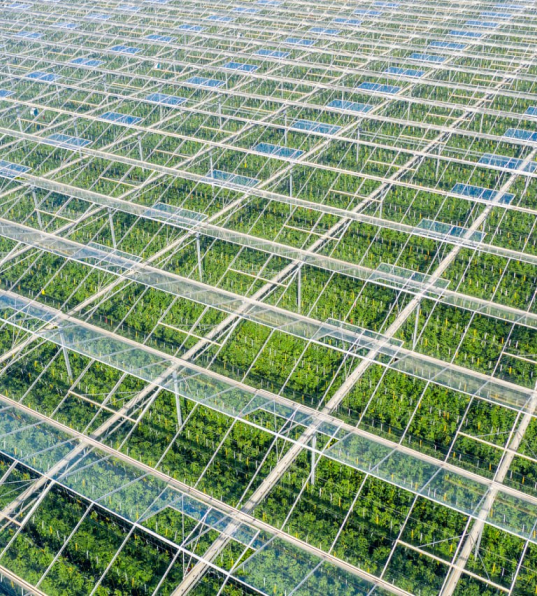
Consistent PPFD in Greenhouses: In greenhouse environments, adjusting artificial lighting to complement solar radiation helps maintain consistent Photosynthetic Photon Flux Density (PPFD) throughout the desired photoperiod.
Cost-Effective Lighting Scheduling: Adjusting lighting during peak energy tariff hours allows facilities to leverage lower-cost electricity, reducing operational costs and increasing flexibility.
Fading Adjustment: Artificial fade-time adjustment can mimic natural transitions in solar radiation during dawn and dusk to the benefit of the plant’s circadian clock and day-night cycle.

Traditionally, two main methods have been used to dim LED technology through an electrical circuit, each offering distinct benefits and challenges.
Pulse Width Modulation (PWM)
Pulse Width Modulation (PWM), creates the appearance of dimming by rapidly switching LEDs on and off. PWM operates based on two parameters: frequency (the rate at which the LEDs switch per second) and duty cycle (the proportion of each cycle during which the LEDs are on). At high frequencies, PWM modulates brightness imperceptibly to the human eye, delivering controlled light output with fewer compromises.
However, PWM dimming introduces drawbacks such as flicker and noise, which can cause eye strain, fatigue, and electromagnetic interference, potentially impacting nearby devices. At lower frequencies, PWM can lead to visual strobing and banding, especially in moving objects or video recordings. The increased switching frequency can place additional strain on power supplies, potentially reducing their lifespan and efficiency. There is currently insufficient research to conclude the impact of pulsed light or flicker on plant photosynthesis although there are conflicting studies available.

Constant Current Reduction (CCR)
Constant Current Reduction (CCR) works by supplying a stable current to the LED, adjusting brightness by varying the current level. This system ensures a constant photon flux, with reduced current dimming the LED’s output. CCR provides a smoother transition in light output compared to PWM and can maintain a more linear dimming curve. CCR is often used when precise lighting control is required although energy efficiencies fluctuate and is generally considered more costly to implement vs PWM.
While CCR offers smoother dimming, it may cause colour shifting when dimming LEDs to extremes, which can affect the desired light recipe. Additionally, CCR typically supports higher output voltages, making it better suited for Class 2 devices in damp or wet environments. It also excels in applications requiring strict control of electromagnetic interference (EMI) and is particularly effective in remote applications with long wiring looms, such as in smart greenhouses.

Digital Lighting Protocols in CEA
Both PWM and CCR dimming techniques can be integrated with various lighting control protocols such as 0-10V, DALI, and DMX. Some digital lighting protocols enable two-way communication, providing enhanced functionality for growers and improving operational efficiency. Features such as closed-loop automation, climate computer integration, dynamic light recipe shifting, predictive maintenance, and data capture can significantly benefit some CEA facilities.